
5M of geriatric care
A holistic framework used in geriatric care: Matters Most, Mobility; mind; medication; multimorbidity.
Family
Considered as wider social networks around the older person. This can be close relatives, but also friends, neighbours and community connections.
Home
Considered as a space, not a place.
Interdependency
Considered as a state of interconnection with others, based on connectedness, mutuality and reciprocity.
Parallel planning
Considered as the possibility of multiple different outcomes.
Watchful waiting
Considered as an approach to care that engages assessment over time, but does not always require changes to intervention.

Care Provision
Level 2
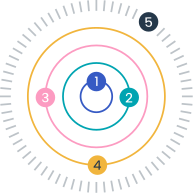
Interactions between the older person and their family, and the setting where care is provided
What does this mean?
- Multiple Agencies Working: a way of working which puts older people at the centre of what we do
What does this involve?
- Multi-disciplinary working across health settings and services
- Multi-sector working, including the vital role of the voluntary sector and compassionate communities
What can support this at this level of the system?
- An awareness of your community needs
- An understanding of referrals in and out of your service
- Using a named contact approach
What can support this across the system?
- Access to resources at crisis points: e.g., out of hours, intermediate care beds
- Access to services which support holistic care: clinical, psychological, practical, social and spiritual needs
- Enhanced access to services to provide practical support: e.g. access to rehab; staying connected with people and places, etc.