
5M of geriatric care
A holistic framework used in geriatric care: Mind, Mobility, Medication, Multicomplexity, Matters Most.
Advancing Frailty
Used to refer to older people whose frailty has progressed to a moderate or severe stage.
Compassionate communities
Defined as communities that actively work together to provide social, emotional and practical support.
Family
Defined as a wider social network around the older person. This can be close relatives, but also friends, neighbours and community connections.
Home
Defined as a space, not a place.
Interdependency
Defined as a state of interconnection with others, based on connectedness, mutuality and reciprocity.
Parallel planning
Defined as the possibility of multiple different outcomes.
Watchful waiting
Defined as an approach to care that engages assessment over time, but does not always require changes to intervention.
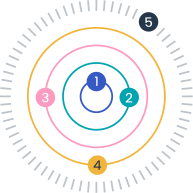
Care Provision
Interactions between the older person and their family,
and the setting where care is provided
- Working together: a way of working which puts older people at the centre of what we do
- Multi-disciplinary working across health settings and services
- Multi-sector working, including the vital role of the voluntary sector and compassionate communities
- An awareness of your community needs
- An understanding of referrals in and out of your service
- Using a named contact approach
- Access to resources at crisis points: e.g., out of hours, intermediate care beds
- Access to services which support holistic care: clinical, psychological, practical, social and spiritual needs
- Enhanced access to services to provide practical support: e.g. access to rehab; staying connected with people and places, etc.